
STOP ASKING PEOPLE TO BE MORE RESILIENT
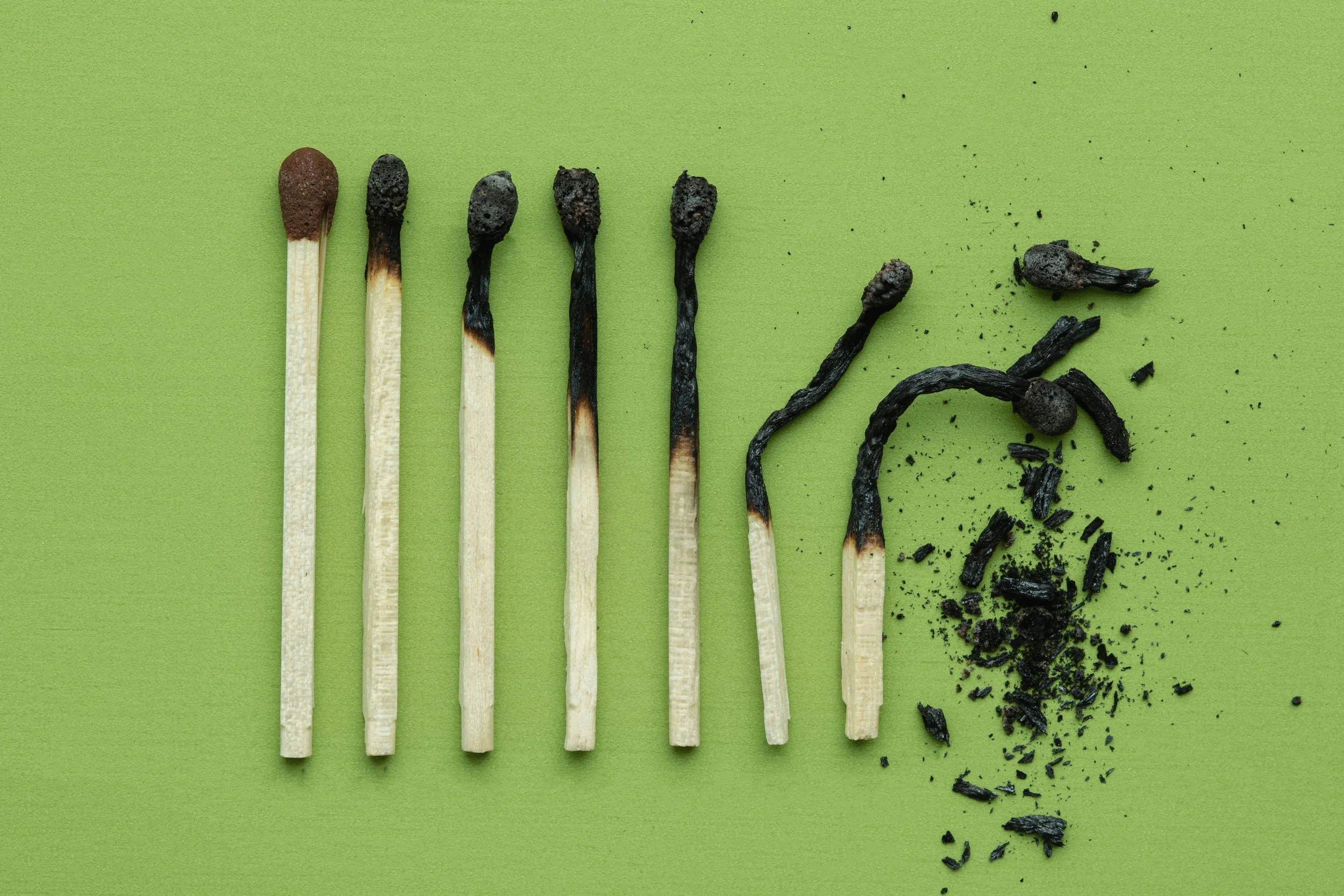
91% of UK adults report high or extreme pressure over the past twelve months, and one in five workers took stress-related time off, rising to two in five among 18- to 24-year-olds.
Alex is one of the 1 in 5. He tried booking a proper day off and spent it on the sofa, laptop balanced on his knees, answering Teams messages between episodes of something he wasn't really watching and by 11am he'd checked his inbox four times.
Six weeks later he was signed off again, and this time for longer.
As my family and I reach the end of the first week back at school, after the annual summer holiday juggle as a parent, I definitely recognise the sofa part, phone in hand, half watching something, ‘just checking one thing’ part. In the past I’ve taken my laptop on holiday, and I've called those days off, but they weren’t really, if I’m honest with myself.
In the UK we used to think about workplace injury the way most organisations still think about burnout. For most of the 20th century it was a worker problem, and the answer was better workers who took more care, paid more attention, and needed more training.
Then the framing changed step by step with the Health and Safety at Work Act in 1974, which put the legal duty on the employer rather than the individual, followed by guarded machinery, compulsory risk assessment, and jobs redesigned around the mistakes people actually make. All this work led to deaths at work falling from 495 in the 80s to 124 in 2024/25, while the workforce grew by millions.
None of this was achieved by telling people to be more careful, just like burnout won't be solved by telling people to be more resilient. Unfortunately, the Burnout Report 2026, published by Mental Health UK reads like a system still blaming the worker.
When I first read the report, what stayed with me most was that, of the people who took time off for stress-related mental health reasons, more than a quarter of people went back into exactly the same conditions, with no real recovery support in place.
Two stories I hear about resilience
The first story reads like burnout is a personal capability gap…build better habits, protect your evenings, learn to say no, do the breathing exercises. There's truth in this and lots of research to support the benefits of quality sleep, movement, boundaries and a decent support network. These things can genuinely change how much pressure a person can absorb before it tips into exhaustion, and Alex would benefit from all of it.
Where this story runs out of road is the workload itself—because no amount of personal resilience fixes a job that was never sustainable to begin with. If the role requires being reachable at all hours, if headcount has shrunk while output expectations haven't moved, or if a manager has never been taught to spot the early signs of someone struggling, then telling the individual to build resilience is really asking them to absorb a structural problem on their own.
The second story swings the other way and puts it entirely on the organisation by suggesting if you fix the systems and the culture, then the individual will be fine. This is closer to what the report is pointing at, but I think it's still only half the picture. Organisations are made of people, and the people setting the tone are working inside the same pressure as everyone else so when a beautifully redesigned workload policy is produced it can't help much if the manager delivering it has never had an honest conversation about their own capacity, let alone anyone else's.
When working with clients I emphasise that neither of these stories are true on their own, and I don’t think it’s a 50/50 split either. Simply because it’s the person who pays for burnout but it’s often the employer who decides how much work lands on them. Nobody had that conversation with Alex between his first return to work and his second—his workload was never once discussed.
What actually helps
Manager capability matters more than manager goodwill.
Most managers genuinely want to support their teams, but far fewer have been given the skills to notice early strain, raise a workload conversation without it turning into a performance review—or push back to their own leadership when the ask has gone too far. Goodwill without capability tends to produce well-meaning managers who still miss the signs.
Workload needs to be visible at the point decisions get made, not after the fact.
People need permission to be figuring it out rather than having it all sorted, and this is where individual and organisational responsibility actually meet. A culture where saying "I'm stretched" feels safe does more for resilience than any resilience tools alone can do, and building that kind of culture is squarely an organisational job, not a personal one.
Where that leaves us
Alex needs a manager who can spot what's happening before it becomes a second period of leave, and an organisation prepared to ask why the workload rose in the first place.
The Burnout Report data suggests most UK organisations are still treating this as a wellbeing initiative problem when it's actually a workforce design problem. That's a harder shift to make, but a genuinely hopeful one too, because design problems can be redesigned.
Nobody had to become a better person for workplaces to get safer because instead they started to be designed by people who accepted that human beings get tired, distracted and overloaded, and who built for that rather than against it. Unlike a personal failing, a system can be rebuilt without anyone having to feel like they were the weak link in it.
So where does that leave you, start by asking, is your organisation treating burnout as something people need to get better at, or something it designed and can therefore redesign?
And a smaller one, just for you, when did you last take a day off that was actually a day off?